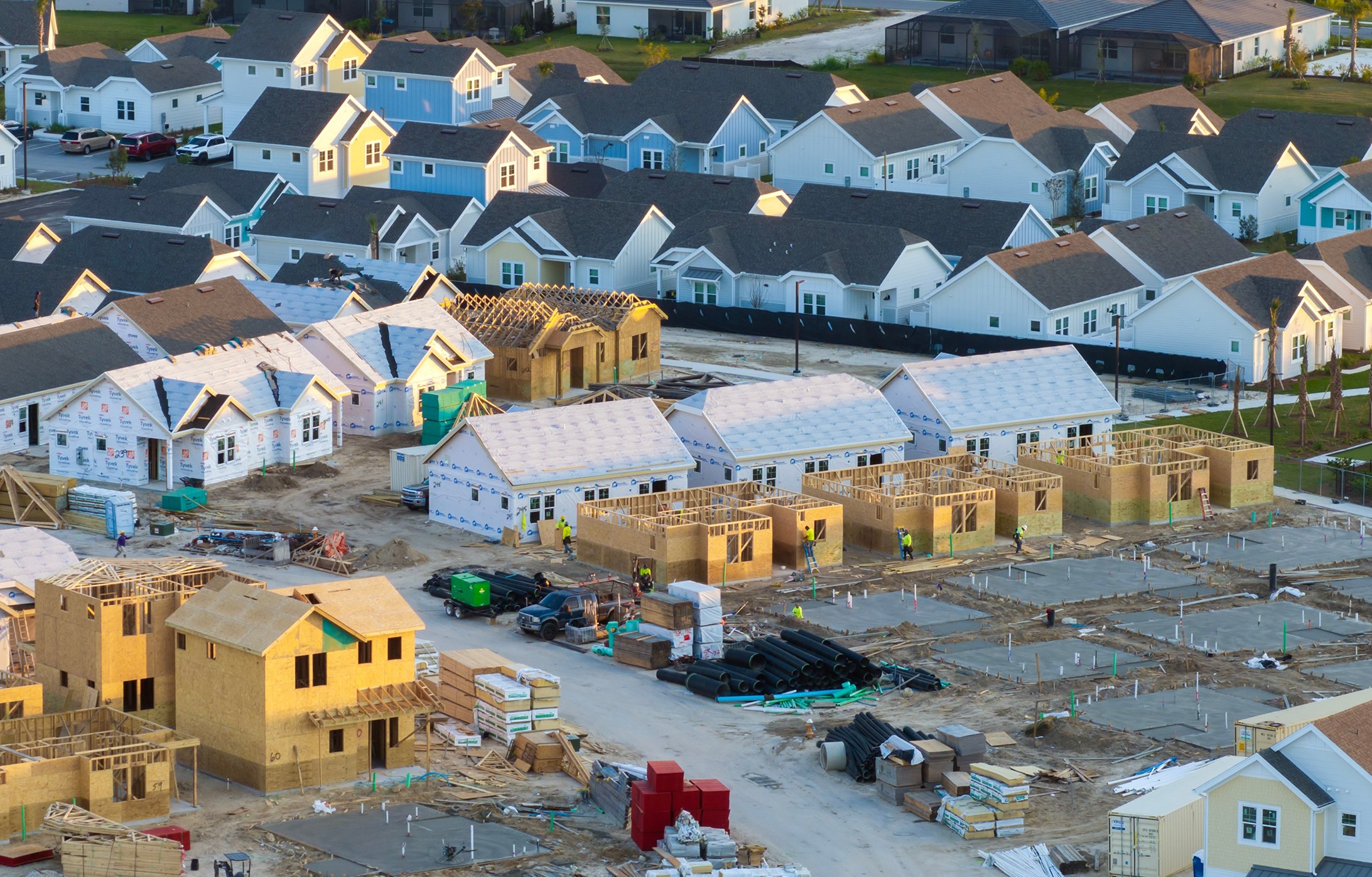
Residential construction and renovation lending can help mortgage lenders expand their product offerings and strengthen relationships with borrowers and builders. It also introduces operational complexity that conventional mortgage processes may not be designed to manage. Builder qualifications, project budgets, inspections, title activity, lien documentation, change orders, and draw requests must remain aligned throughout the loan lifecycle. When requirements vary across teams or files, lenders may face funding delays, inconsistent decisions, limited portfolio visibility, and greater collateral exposure.
A scalable construction lending program requires more than faster draw processing. It needs policies that connect pre-close review, active-project oversight, title and lien controls, and portfolio reporting. Clear decision rights and escalation paths can reduce avoidable follow-up, support more consistent funding decisions, and provide a clearer view of the path to project completion. This paper draws on Granite Risk Management’s work with one mortgage lender that scaled its residential construction and renovation programs using this approach.
Introduction: Growth Can Expose Gaps in the Operating Model
Construction lenders finance an asset while that asset is being created. Unlike a conventional mortgage secured by an existing property, a construction loan may begin with a vacant lot or a partially improved site. The expected collateral value depends on future performance by the builder, borrower, subcontractors, suppliers, inspectors, and title providers. That difference changes the lender’s operational responsibility.
One national mortgage lender encountered this dynamic directly while preparing to launch and expand a residential construction and renovation loan program. Process steps varied across teams, which led to inconsistent turnaround times, avoidable funding delays, and elevated operational risk. Without a structured resource to manage builder review, draw requests, inspections, and title activity, the lender saw delays in project completion, borrower dissatisfaction, and reputational exposure with builders and title providers. The primary risk centered on collateral that did not reach completion on schedule, or did not reach completion at all, which carries significant consequences for a construction lender.
Consider a routine draw request. A builder submits invoices for several line items and reports that the related work is substantially finished. An inspection indicates progress, but the percentage observed does not align with the amount requested. A change order moved funds between budget categories. One lien waiver is missing. A title update contains an item requiring review. Subcontractors are waiting for payment.
The lender must determine:
Draw administration becomes difficult to predict if these questions are answered differently across employees, branches, or service providers. Files may move repeatedly among operations, credit, title providers, inspectors, and builders. Documentation issues can delay decisions, while more serious concerns may stay hidden within email threads or disconnected systems.
The pressure rises as a lender expands into new markets, adds products, or increases loan volume. A process that works for a small portfolio may not perform consistently at scale. The central challenge is process variation, not simply loan volume.
A scalable program needs a controlled path from underwriting through final disbursement, one that preserves the lender’s credit and funding authority while distinguishing routine administration from matters that require judgement or escalation. For the lender introduced above, that meant reaching out to Granite Risk Management around a defined set of objectives: reducing credit and operational risk through builder evaluation and documentation controls, improving the speed and predictability of draw funding, strengthening the builder and borrower experience through clear and repeatable processes, and building stronger relationships with builders and borrowers across markets.
Context and Background: Why Stronger Controls Matter Now
The Collateral Changes Throughout the Loan
The lender’s position evolves with the project. Funds are converted into labor, installed materials, and physical improvements through a series of advances. An inspection provides a view of site conditions at a single point in time. It does not independently confirm that invoices are valid, subcontractors have been paid, the budget remains sufficient, or title requirements have been met [1]. Progress reporting, financial documentation, title activity, and draw authorization need to work together to close that gap.
Contractor fraud, cost overruns, and lien exposure are among the risk categories construction lenders monitor most closely, and each can be harder to control when inspection and draw review are inconsistent [2].
Project Economics Can Shift After Closing
Construction budgets are based on assumptions about labor, materials, permits, schedules, and subcontractor availability. Those assumptions may change. A cost increase in one trade may consume contingency funds. A permit delay may affect the schedule and carrying costs. A builder substitution can change pricing or execution risk. A change order that appears manageable on its own may have a larger effect when considered alongside prior changes.
The draw process should therefore evaluate more than the current request. It should also consider whether remaining funds appear sufficient for the remaining scope, since a project can show visible progress on site while funded balance no longer supports what is left to build [1].
Title and Lien Practices Vary by Jurisdiction
Mechanics’ lien requirements, notice procedures, title practices, and available title endorsements may differ by state, and in some states a lien can take priority over a lender’s mortgage depending on when work began relative to the loan closing [3]. Deadlines, required notices, and eligible claimants are governed at the state level, and no uniform rule applies across jurisdictions [4]. These differences make undocumented or informal practices difficult to apply consistently across a multistate portfolio. As the same lender expanded into new states, it needed defined rules for when to order title date-downs and how to handle final title policies in each jurisdiction.
These variations reinforce the operational need for jurisdiction-aware procedures and clearly defined review paths, and they are not substitute for legal guidance.
Product Structures Create Different Needs
A one-time close construction loan does not follow the same workflow as a two-time close, a renovation loan, modular project, or manufactured-home transaction. Product design can affect draw sequencing, documentation, inspections, title activity, and conversion to permanent financing. Applying one generic process across these products may create unnecessary work in some files and meaningful gaps in others.
Fragmented Tools Can Limit Visibility
Construction lending often relies on spreadsheets, emails, shared folders, and separate provider portals. These tools may contain the required information, but project status can be difficult to interpret when records are fragmented. Centralized technology can connect inspection reporting, project tracking, draw activity, approvals, and exceptions, though it works best when it reinforces lender policy rather than substituting for it.
Core Analysis
Risk Begins Before the First Draw
Post-close controls cannot fully compensate for weak pre-close evaluation. Before funding, lenders need a reasoned view of three questions: is the builder suited to the project, is the proposed budget reasonable for the scope and market, and do the contract and supporting documents provide a workable basis for project administration.
A builder evaluation may weigh experience with similar projects, financial capacity, insurance documentation, business structure, and any relevant disputes. The evaluation surfaces concerns that may warrant additional conditions, escalation, or a different decision.
Contract and budget assessment should go beyond confirming that line items add up to the total project cost. Risk may be hidden within allowances, contingency levels, borrower-supplied items, omitted work, or allocations that do not reflect the expected construction sequence. The review may consider whether:
Pre-close review establishes the baseline for evaluating later progress, draw requests, and budget changes.
Draw Administration Functions as a Control Process
A draw request is a recurring credit and collateral decision. The lender is deciding whether to advance additional funds against a changing asset. That decision should be supported by a structured package, which may include:
Requirements may differ by draw stage, product, jurisdiction, project condition, and lender policy. Consistency means applying the approved rules within the relevant category, not applying identical requirements to dissimilar projects.
The review process should reconcile three views: the physical view of what work was observed; the financial view of what amount is being requested, and what has already been disbursed; and the documentation view of what support is required under lender policy. A conflict among these views may signal that the file needs clarification or escalation.
The remaining fund analysis is equally important. A project can show visible progress and still face a future funding gap. Repeated change orders, front-loaded payments, or underestimated late-stage costs may reduce funds available for mechanical systems, finish work, utility connections, permits, or final documentation [3]. Draw speed should be evaluated alongside documentation sufficiency, exception volume, and remaining financial capacity. One national lender applied this discipline by centralizing review of each draw request and verifying invoices, lien waivers, and statutory documents before funds moved.
Title, Lien, and Documentation Controls Must Move With the Project
Construction creates continuing title and payment considerations. New parties perform work, materials arrive, and additional funds are disbursed, so related documentation cannot be treated as a closing-only concern.
A lender-specific framework should define how title and documentation move alongside the project. At minimum, it typically covers:
The framework should reflect jurisdiction, product, project type, and lender direction, and it should distinguish operational coordination from legal interpretation.
Cadence matters. Title documentation can become a bottleneck when ordering begins only after the rest of the draw package is ready. A defined ordering and follow-up process may reduce late-stage surprises.
The final advance requires distinct controls of its own. At this stage, participants are often focused on finishing the project, and unresolved documentation may be treated as a formality rather than a requirement. Procedures at this stage may address final inspection status, remaining invoices, lien documentation, title items, permits or occupancy records, and reconciliation of the disbursement account. Final-draw controls should be established when the program is designed, not improvised near the project’s end.
Portfolio Visibility Turns File Activity Into Management Insight
A lender can administer individual draws successfully and still lack a clear portfolio view. Useful management reporting typically covers:
This reporting can help leaders distinguish isolated file issues from recurring process problems. Repeated missing lien waivers may indicate unclear builder instructions. Delays concentrated in one state may point to title workflow differences. Visibility is most valuable when it shows who needs to act, what decision is required, and how long the issue has remained open.
Best Practices and Recommendations
The following practices can strengthen construction lending operations across internal, outsourced, and hybrid models.
How Granite Risk Management Approaches the Challenge
Granite Risk Management works with mortgage lenders to design and administer construction risk management and fund control programs aligned with lender policies, products, and operating requirements. Programs can be lender-branded and built around a defined set of components: consistent builder evaluation, in-depth contract and budget review, draw and inspection requirements specific to each product type, and state-specific rules for title date-downs, endorsements, and trailing documentation [5] [6].
Lenders that adopt this kind of structured approach can see faster draw turnaround, fewer exceptions requiring escalation, and stronger visibility into project status and collateral protection.
This is the model Granite built with the anonymized lender that informed this paper. Granite mapped the lender’s current-state processes and pain points, helped design the program framework from the ground up, and trained a dedicated team before rollout. Because the lender originates agency-eligible construction loans, Granite also helped interpret Fannie Mae, Freddie Mac, FHA, and VA construction guidelines and translate them into requirements the lender’s team could apply consistently.
The relationship continued past rollout. Granite holds ongoing working sessions with the lender’s underwriting, closing, and credit policy teams to review program requirements and address emerging risks. Granite also delivered onsite training sessions to help the lender’s loan officers originate construction loans, position the product with borrowers, and build referral relationships with builders.
Builders reported a clearer understanding of draw requirements, which supported fewer surprises and smoother project cash flow, and the resulting program gave the lender a scalable foundation for continued portfolio growth.
Conclusion
Construction lending risk develops through a sequence of decisions, not a single event. A qualified borrower and a sound initial valuation do not remove the need for builder evaluation, budget discipline, inspections, title coordination, documentation controls, and active exception management. Likewise, an inspection does not independently resolve the financial and legal questions associated with a draw.
As volume rises, process variation may lead to more follow-up, delayed decisions, open title items, internal workarounds, and reduced portfolio visibility. A structured operating model can connect pre-close assessment with active-project oversight and portfolio governance.
Structured oversight will not eliminate uncertainty in construction lending, but it gives lenders a clearer basis for managing that uncertainty as each project moves toward completion.
About Granite Risk Management
Granite Risk Management, an Altisource business unit, provides construction risk management and portfolio oversight services for residential, renovation, and commercial lending programs. Its teams draw on operational experience, construction lending technology, and field-level reporting, applied through lender-specific workflows. Services span project assessment, contractor review, draw administration, inspections, title coordination, funds administration, and final-document follow-up, and can be configured to support an existing construction lending program, or the development of a new operating model.
References
[1] Commercial Real Estate Lending, Comptroller’s Handbook, Office of the Comptroller of the Currency, https://www.occ.gov/publications-and-resources/publications/comptrollers-handbook/files/commercial-real-estate-lending/pub-ch-commercial-real-estate.pdf
[2] Key Responsibilities for Real Estate and Construction Lending Risk Staff, Abrigo, https://www.abrigo.com/blog/key-responsibilities-for-real-estate-and-construction-lending-risk-staff/
[3] Protections Against Mechanic’s Liens, Lexology, https://www.lexology.com/library/detail.aspx?g=a43cacb6-9f32-4ae4-af16-49ca9c6b1af9
[4] Mechanic’s Lien Rights: Contractor’s Guide to Payment Protection, Wiss, https://wiss.com/mechanics-lien-rights-contractor-guide-payment-protection/
[5] Construction Risk Management Services, Granite Risk Management, https://www.graniteriskmanagement.com/professional-services/lenders/
[6] Altisource’s Granite Risk Management Launches New Construction Title Services Platform Powered by Premium Title, Altisource Portfolio Solutions, https://www.altisource.com/about-us/news/press-release/2016/11/altisources-granite-risk-management-launches-new-construction-title-services-platform-powered-by-premium-title/
We use cookies to give visitors and users the best experience. For more information about our personal data processing practices, see our Privacy Policy.
Our website and applications use essential cookies to work properly. In addition, we would like to set: (i) optional “performance” cookies to collect anonymous site visitation and/or use data; and (ii) optional “marketing” cookies to help us understand which content is most valued by our visitors. By enabling our optional cookies, you can help us to provide a better experience for visitors like yourself. For more information about our personal data processing practices, see our Privacy Policy.